Sir Ratan Tata and Lady Navajbai Tata: A Legacy of Generosity, Grace and Compassion
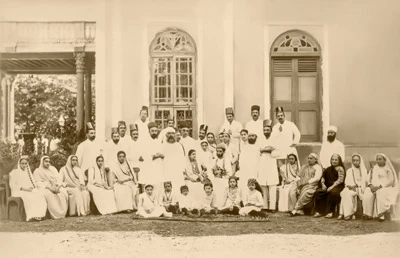 |
History records several accounts of the remarkable partnership between Sir Ratan Tata and Lady Navajbai Tata, a bond that began in 1892 when Sir Ratan Tata, the younger son of Jamsetji Tata married Navajbai Sett, daughter of Ardeshir Merwanji Sett. Together, they nurtured a vision that would shape one of India’s most enduring philanthropic traditions. Their commitment extended beyond conventional causes. As early patrons of art and culture, well before these fields found recognition — they wove together philanthropy and nationalistic causes into a unique legacy that continues to inspire.
Together, Sir Ratan and Lady Navajbai Tata travelled the world, collecting rare art and jade artifacts, while immersing themselves in global cultures and ideas. Their travels reflected their shared curiosity and desire to bring the best of the world back home. Everywhere they went, their grace and generosity left an impression.
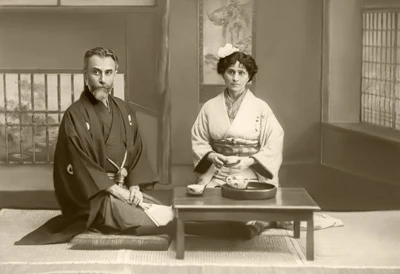
One such journey was an eleven-week tour of Japan in 1912, during which Sir Ratan acquired exquisite Japanese and Chinese art. Before departing, he generously gifted $5,000 to Mr Nomuran, his Japanese companion and advisor during the trip. Lady Navajbai, equally thoughtful, presented beautiful emeralds to Mrs and Miss Nomuran—an elegant expression of gratitude that reflected their values of generosity and grace1.
 |
The York House at Twickenham, purchased by Sir Ratan in 1906 from the Duke of Orleans, became another symbol of their role as cultural ambassadors. Transformed into a vibrant hub of elegance and culture, the estate was adorned with sculptures, paintings, and a Japanese garden. With more than twenty staff in livery, the house came to be known for its refined hospitality. In 1907 and again in 1911, Sir Ratan and Lady Navajbai Tata hosted two iconic gatherings at York House—a distinguished garden party and a grand reception held in honour of Indian princes visiting England2. Following Sir Ratan’s death in 1918, Lady Navajbai sold the estate to his friend, Sir William Joynson Hicks (later Lord Brentford), but not without gifting a villa within the estate to the loyal housekeeper, Mr Mellins. Decades later, in 1987, Mr JRD Tata and Mr Naval Tata made donations through the Sir Ratan Tata Trust and Tata Limited to support the estate's preservation—a testament to the family’s commitment to heritage3.
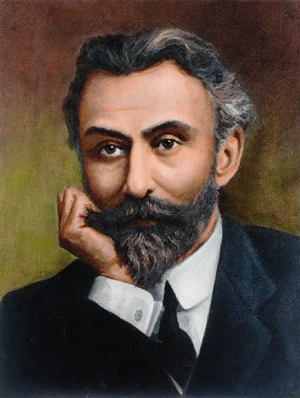 |
Sir Ratan’s legacy extended far beyond culture and hospitality. He possessed a profound empathy for India’s socio-economic struggles and supported movements of self-reliance, including early efforts in the Satyagraha movement. In his letter to Gopal Krishna Gokhale in 1909, he wrote of his admiration for those fighting for justice in Transvaal, South Africa, and to be treated as equals. He wrote: “I have read with deep disappointment and regret the news that the negotiations for a compromise on the Transvaal question have fallen through, and that Mr Gandhi has left for South Africa to resume the struggle. It is a struggle of which the people of this country have every reason to be proud…I have been following with close interest the proceedings of the public meetings that are being held in this country to give expression to our feelings in this matter; but it seems to me that the struggle has now reached a stage when our appreciation of it must take the form, not merely of expressions of sympathy, but also of substantial money help…For myself, I feel I should lose no more time in doing my duty by our brave and suffering brethren in the Transvaal, and I have, therefore, great pleasure in enclosing a cheque for Rs 25,000, which I shall feel obliged by your forwarding to Mr Gandhi,—the money to be spent in relieving destitution, and in aid of the struggle generally.”4
His vision also extended globally, making substantial contributions to institutions like the London School of Economics (LSE), where he helped foster academic excellence and intellectual leadership, which led to the establishment of the Ratan Tata Foundation at LSE in 1912. The Sir Ratan Tata Trust reinforced this commitment with two additional five-year grants in 1921 and 1926, while the creation of the Sir Ratan Tata Post-Doctoral Fellowship in 1997 further strengthened this enduring association several decades later.5
In 1918, Sir Ratan in his will, bequeathed a significant portion of his wealth to charitable causes—an extraordinary act that led to the creation of the Sir Ratan Tata Trust in 1919.
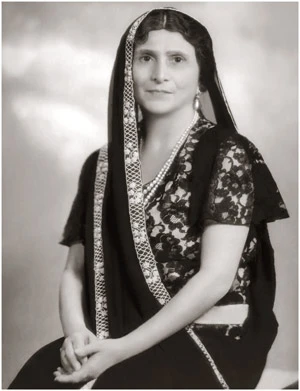 |
At just 41, Lady Navajbai Tata became a widow, and though grieving, she stepped into the role as the Trust’s first chairperson with quiet resolve and an unwavering sense of duty. She not only safeguarded her husband’s ideals but became a force of her own in the world of philanthropy. She continued to support institutions close to Sir Ratan Tata’s heart—such as the Bai Hirabai Tata Girls School in Nargol and the London School of Economics, while also championing new initiatives in health, research and education. Under her stewardship, the Trust supported organisations such as the Sir Ratan Tata Charitable Institution for Destitute Children (Ahmednagar, 1921), the Sir Ratan Tata Institute (Mumbai, 1928), the Sir Ratan Tata Library at Delhi School of Economics (1948), the Sir Ratan Tata Laboratory for metallurgy in Jamshedpur (1950), among several others.
Lady Navajbai Tata extended support to the Deccan College and private archaeologists such as Mr Olaf Prufer, thereby ensuring the continuation of vital historical research. This echoed the earlier commitment of Sir Ratan Tata, who had funded India’s first archaeological excavation at Pataliputra (1913–1917), which led to the discovery of Emperor Ashoka’s throne room. Among Lady Navajbai Tata’s other remarkable contributions was the Trust’s support to the Prince of Wales Museum in Mumbai, now called Chhatrapati Shivaji Maharaj Vastu Sangrahlaya, for the conservation and display of Sir Ratan’s invaluable art collection.
Lady Navajbai Tata, thus, transformed her husband’s trust into action—honouring his memory with her own grace and generosity, and ensuring that the family’s legacy would continue to inspire and serve generations to come.
Photo courtesy: Tata Central Archives
Sources:
1Indian Nabobs on their Travels, The Rome Tribune-Herald, 3 December 1916 | 2The Times of India, 27 July 1911 | The Pittsburgh Press, 28 July 1907 | 3More articles on Sir Ratan Tata and Lady Navajbai Tata, 1957 – 1997, Tata Trusts Collection | 4Indians in the Transvaal – Timely Action, The Times of India, 1 December 1909 | 5Researching inequality – LSE and the Ratan Tata Trust, LSE Blogs, 23 October 2017
Quick links
About JRD Tata | Early days of Jamsetji Tata
About Sir Dorabji Tata | Sir Dorabji Tata: Catalyst for India's Olympic Debut
About Lady Meherbai Tata
Sir Dorabji and Lady Meherbai Tata: A Partnership of Vision and Service
About Sir Ratan Tata | Sir Ratan Tata - Support to nationalistic causes
About Lady Navajbai Tata
About JRD Tata
About Ratan N. Tata | A tribute from Cornell Chronicle
Anecdotes
