AI diagnostics, clinical decisions, disease surveillance-IHF is backing tech start-ups to reimagine public healthcare around India's lived realities
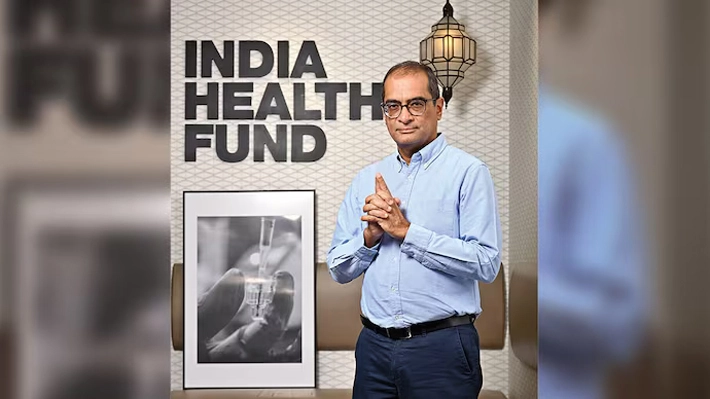 |
| BUSINESS ACUMEN: Madhav Joshi joined IHF after 25 years with multinationals like Nestlé and Pfizer. (Photo: Mandar Deodhar) |
From his office in Mumbai's iconic Elphinstone Building, Madhav Joshi, CEO of India Health Fund (IHF), often reflects on the building's quiet legacy. It was here that Ratan Tata spent his final working years as chairman emeritus of Tata Sons and chairman of Tata Trusts. It was also here, Joshi says, that Tata's vision took institutional shape: that technology-led innovation could make a meaningful difference in healthcare delivery.
Founded in 2017 by Tata Trusts, IHF's mission was ambitious-to eliminate infectious diseases and reduce public health risks in domains where private capital rarely ventures. And how was that to be achieved? By funding start-up technologies that diagnose faster, work more accurately and yet remain affordable.
The timing was critical. India had announced targets to eliminate tuberculosis by 2025, malaria by 2027, and sharply re duce maternal and child mortality.
"Innovation based on science and technology was identified as a potential disruptor," Joshi says, one that could help public programmes close the gap between policy and outcomes. When he joined IHF in 2020, the challenge felt immediate-sharpened further by CO VID-19, which brought into focus how innovation could transform diagnosis and treatment.
Today, IHF positions itself as a rare global experiment: private philanthropic capital from a developing country backing solutions built in that country, for the developing world. While it began with TB and malaria, its remit has expanded to antimicrobial resistance, lung health, women's health, besides the growing health impacts of climate change.
Its work is structured around three priorities: enabling earlier diagnosis and treatment through technology; compensating for limitations faced by healthcare workers; and deploying voice and capital to catalyse wider action. The challenge is only growing, given the shift in disease patterns. Mosquitoes, for instance, are moving into regions previously untouched. The Himalayan belt is a good example, Joshi says, where massive outbreaks of dengue have led to high mortality due to a lack of immunity. So, climate-sensitive and water-borne diseases now sit squarely within IHF's focus.
For investments in digital technologies, it has zeroed in on three core areas: diagnostics, clinical decision support and disease surveillance, working closely with institutions such as the Brihan Mumbai Municipal Corporation, National Health Mission, ICMR, AIIMS and the World Health Organization. Solutions are selected through a structured pipeline and subjected to a four-level evaluation.
The portfolio reflects that rigor. !HF-backed Qure.ai's qXR is an AI-powered tool that uses a smartphone to read chest X-rays for TB within minutes. So far, it has screened over 120,000 people across 128 sites in India. TrakltNow's Moskeet, a smart device, identifies and traps disease-carrying mosquitoes. Other investments include Medprime's AI tools for faster, cost-effective malaria diagnosis and Hemex Health's handheld Gazelle, now used in 27 countries for detecting sickle cell disease. Molbio's battery-operated TrueNat enables TB testing within 90 minutes, while Huwel Lifesciences' Quantiplus is India's first ICMR-recommended open RT-PCR solution. In a country with an acute shortage of radiologists, such gains are proving to be transformative.
EXPERTSPEAK
“Developing and scaling affordable, easy-to-use point-of care diagnostics is especially critical for countries like India. IHF focus on these core capabilities is aiding the cause of real healthcare,” MURALIDHARAN NAIR, Executive Director, EY
WHY IS IT A GEM<
- Deploys philanthropic capital in health domains where markets and investors rarely venture
- Backs and scales affordable, technology-led solutions from India for India and the developing world
- qXR, an Al-powered tool by IHF backed Qure.ai, uses a smartphone to read chest X-rays for TB within minutes. So far, it has screened over 120,000 people across 128 sites
This article was published in all print editions of India Today and online on 2 February 2026. The text above is the online version.
