On National Handloom Day, experts and policymakers highlight the urgent need to make Indian handloom aspirational, economically viable, and future-ready
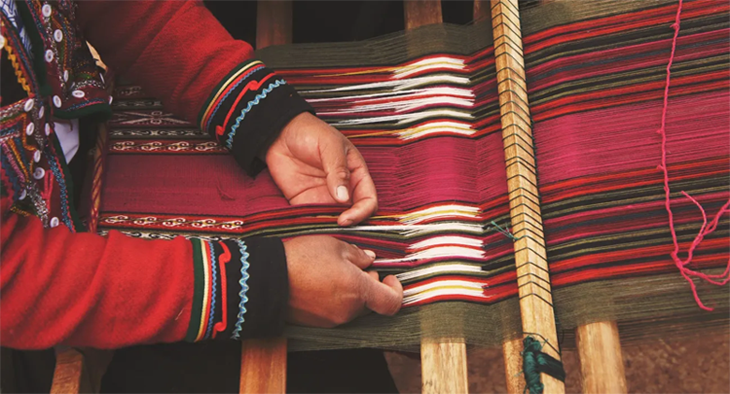 |
As India celebrates the 11th National Handloom Day on August 7, stakeholders across the spectrum—from policymakers and non-profits to grassroots weavers—are calling for a renewed commitment to safeguard the country’s rich textile heritage. Despite being one of the largest cottage industries in India, handloom faces significant threats in the modern age—from diminishing artisan participation to market disconnects and design stagnation.
India is home to over 2.8 million handloom weavers, according to the latest Handloom Census, contributing nearly 15 per cent of global textile production. Yet, the sector accounts for only 4.5 per cent of the domestic textile market, revealing a stark disparity between production potential and market reach.
Reimagining Handloom as Aspirational
“India’s handloom legacy is a living heritage. However, it faces challenges due to the reducing patronage from a cultivated consumer and dwindling artisan participation,” says Mridula Tangirala, Head (Tourism), Tata Trusts. “The critical task lies in making both handloom buying and selling aspirational. Of course, it needs to be economically attractive, particularly for the next generation of weavers.”
Through the Antaran initiative, Tata Trusts is working to bridge the gap between heritage craftsmanship and contemporary consumer needs. The programme supports traditional weavers across lesser-known clusters in Assam, Nagaland, Odisha, and Andhra Pradesh, helping them evolve into artisanal entrepreneurs. “We focus on building strong brands for these weavers, enabling ethical trade, and ensuring fair pricing,” Tangirala adds.
But more than just economic gain, the initiative is rooted in restoring dignity of labour, cultural heritage, and community pride. “Empowering handloom weavers is not just about preserving tradition—it is a powerful act of nation-building,” she notes.
The Policy Perspective: Beyond Recognition
In recent years, government schemes like National Handloom Development Programme (NHDP) and Handloom Weavers’ Comprehensive Welfare Scheme (HWCWS) have provided financial assistance, skill training, and raw material supply to lakhs of artisans. However, industry experts stress that policy alone is not enough.
“To build a sustainable handloom future, we must reimagine policies with artisans at the centre,” says Tangirala. She advocates for a cluster-centric approach with 100 per cent saturation to ensure every artisan benefits from design education, technical training, and business acumen.
Other critical interventions to strengthen India’s handloom sector include eliminating middlemen to promote direct-to-consumer sales, allowing weavers to better understand market demand while securing higher margins. Emphasis must also be placed on promoting eco-conscious practices such as the use of natural fibres and organic dyes, aligning the industry with growing global sustainability trends.
Equally important is investment in traceability and IoT-enabled tools, which can build transparency and consumer trust by documenting a product’s journey from yarn to final purchase. In addition, there is a pressing need for innovative financing models, including working capital support and the establishment of accessible yarn banks to ease operational challenges.
Lastly, it is crucial to recognise and remunerate the contributions of women artisans, many of whom remain unpaid and invisible in weaving households, despite playing a central role in sustaining the craft.
“Vibrant craft clusters can truly thrive through collaborative efforts between governments, private enterprises, and local communities,” says Tangirala. “By strategically integrating cutting-edge, context-appropriate technology, we can bridge the gap between our rich artisanal heritage and today’s discerning consumers.”
A New Kind of Growth
India’s export of handloom products stood at Rs2,417 crore in 2023–24, as per the Ministry of Textiles, but the global market offers far greater potential. The government is aiming to double handloom exports by 2030, with support for ecommerce integration and overseas promotion through platforms like the India Handloom Brand (IHB).
Additionally, the launch of the PM Mega Integrated Textile Region and Apparel (PM MITRA) Parks across seven states is expected to improve infrastructure and create employment, although concerns remain about whether such industrial-scale initiatives can truly integrate artisan-led handloom traditions.
A Future Threaded in Inclusivity
The challenges of revitalising the handloom sector are complex, but so is the opportunity. With India’s millennial and Gen Z consumers showing increasing interest in ethically made, sustainable fashion, the timing may be just right to reposition handloom as both culturally rooted and aspirational.
Ultimately, as Tangirala puts it, “Safeguarding this legacy means enabling artisans to innovate sustainably, earn equitably, and retain ownership of their craft—while making handloom a part of everyday life for modern India.”
The article was first published on 7 August, 2025 on BW Retail World.
